
The Wealth Trap Almost Everyone Falls Into
We all dream of financial freedom, but as our income grows, we often find ourselves caught in the wealth trap. This subtle cycle of earning more only to spend more is a quiet epidemic that keeps even high earners living paycheck to paycheck. If you have ever wondered why your bank account doesn’t seem to reflect your hard work, you are likely experiencing this common phenomenon.
Understanding the Wealth Trap
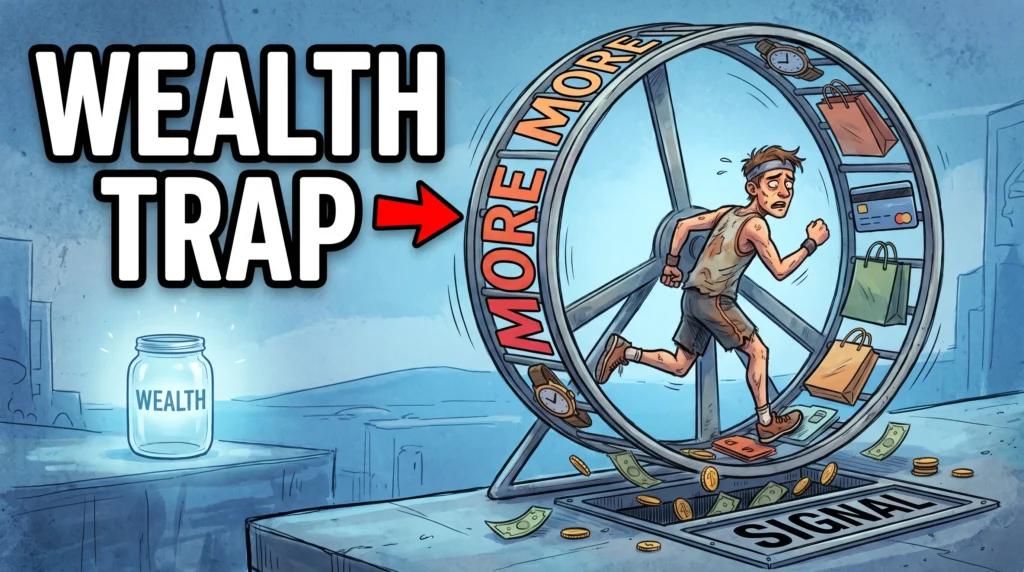
At its core, the trap is a psychological and financial illusion. It occurs when your lifestyle expectations scale at the exact same rate—or faster than—your income. The moment you secure a raise, a bonus, or a higher-paying job, your baseline of “normal” shifts. Suddenly, what once felt like luxury purchases transform into daily necessities.
The Trap of Lifestyle Creep
This trap is closely related to a sociological concept known as lifestyle creep. It is the insidious inflation of your cost of living as your discretionary income rises. Whether it is upgrading to a luxury sedan, moving into a larger apartment, or dining at high-end restaurants, lifestyle creep quietly consumes your potential savings.

Why We Fall for It
We fall into this trap because human beings are wired for social comparison. We look at our peers, neighbors, and social media feeds, feeling an innate pressure to project success. This external validation often comes at the cost of our financial stability, making us “look rich” while we remain functionally broke.
“Too many people spend money they haven’t earned, to buy things they don’t want, to impress people they don’t like.” — Will Rogers
How to Avoid the Wealth Trap and Build True Prosperity
Escaping this cycle requires a fundamental shift in how you view money, assets, and success. If you are just starting your financial journey, understanding these principles is key. In fact, checking out our foundational thoughts at Hello world! can help ground your perspective on beginning anew.
1. Distinguish Between Being Rich and Being Wealthy
To steer clear of the trap, you must learn to differentiate between showy riches and silent wealth. Being “rich” is about current income and outward displays of consumption—the cars, the watches, and the designer clothes. Being “wealthy,” however, is about sustained financial freedom, liquidity, and assets that generate income even when you are not actively working.
2. Practice “Reverse Budgeting”
Instead of deciding how much to save after you have finished spending, flip the equation. Save first. As soon as your income hits your account, automatically route a designated percentage (e.g., 20% or more) into investment accounts, retirement funds, or emergency savings. What remains is yours to spend guilt-free.
3. Keep a Steady Baseline
When you get a raise, challenge yourself to keep your spending habits unchanged for at least six months. This prevents immediate lifestyle inflation and allows you to experience the compounding power of your new surplus income in your investment portfolio.
Final Thoughts: Redefining True Wealth
Ultimately, the wealth trap is a mental barrier disguised as material success. True financial freedom is not about buying whatever you want, whenever you want. It is about having options, control over your time, and the peace of mind that comes with knowing you are secure. By recognizing the trap today, you can start building a life of authentic, lasting wealth.